






The retail industry is undergoing a transformative shift as businesses increasingly leverage big data to enhance their strategic operations. In recent days, a compelling trend has emerged - the integration of big data analytics to personalize customer experiences and streamline inventory management.
Retail giants are utilizing sophisticated data analytics tools to collect and analyze consumer data from various touchpoints. This approach allows them to gain profound insights into customer preferences and purchasing behavior. By deploying these insights, retailers can craft personalized marketing strategies, thereby boosting customer engagement and retention.
A well-documented case from my professional circle involves a major retail chain that implemented a robust big data strategy. The company analyzed extensive datasets from online and offline channels, leading to a 20% increase in sales. This was achieved by offering personalized promotions and optimizing their product selection based on regional preferences.
In addition to enhancing customer experience, big data is playing a pivotal role in optimizing supply chain operations. By analyzing past sales data and current market trends, retailers can effectively manage inventory levels, reducing both overstock and stockouts. This data-driven approach ensures that products are available when and where customers demand them, leading to more satisfied customers and reduced operational costs.
Moreover, the retail industry is witnessing a burgeoning trend in predictive analytics, where AI-powered algorithms forecast future sales trends. This proactive stance enables retailers to anticipate market changes and adjust their strategies accordingly. This predictive capability is invaluable in today's volatile market environment, where consumer preferences are constantly evolving.
Interestingly, a case study of another chain store revealed how predictive analytics could predict fashion trends. By analyzing social media data and consumer surveys, they accurately forecasted the rise of a particular fashion style, allowing them to stock up on trending items ahead of competitors.
As big data continues to steer the retail industry towards greater efficiency and personalization, businesses that successfully harness the power of data analytics are poised to lead in market share and customer loyalty. The ongoing evolution of big data technologies suggests a promising future for retailers who adapt to these innovations.
For retailers looking to stay competitive, now is the time to invest in data analytics capabilities. By doing so, they can redefine their operations, meet customer needs more effectively, and ultimately achieve a significant competitive advantage in the dynamic retail landscape.
Estimated reading time: 2 minutes, 0 seconds
Harnessing Big Data: The New Frontier in Retail Strategy Featured
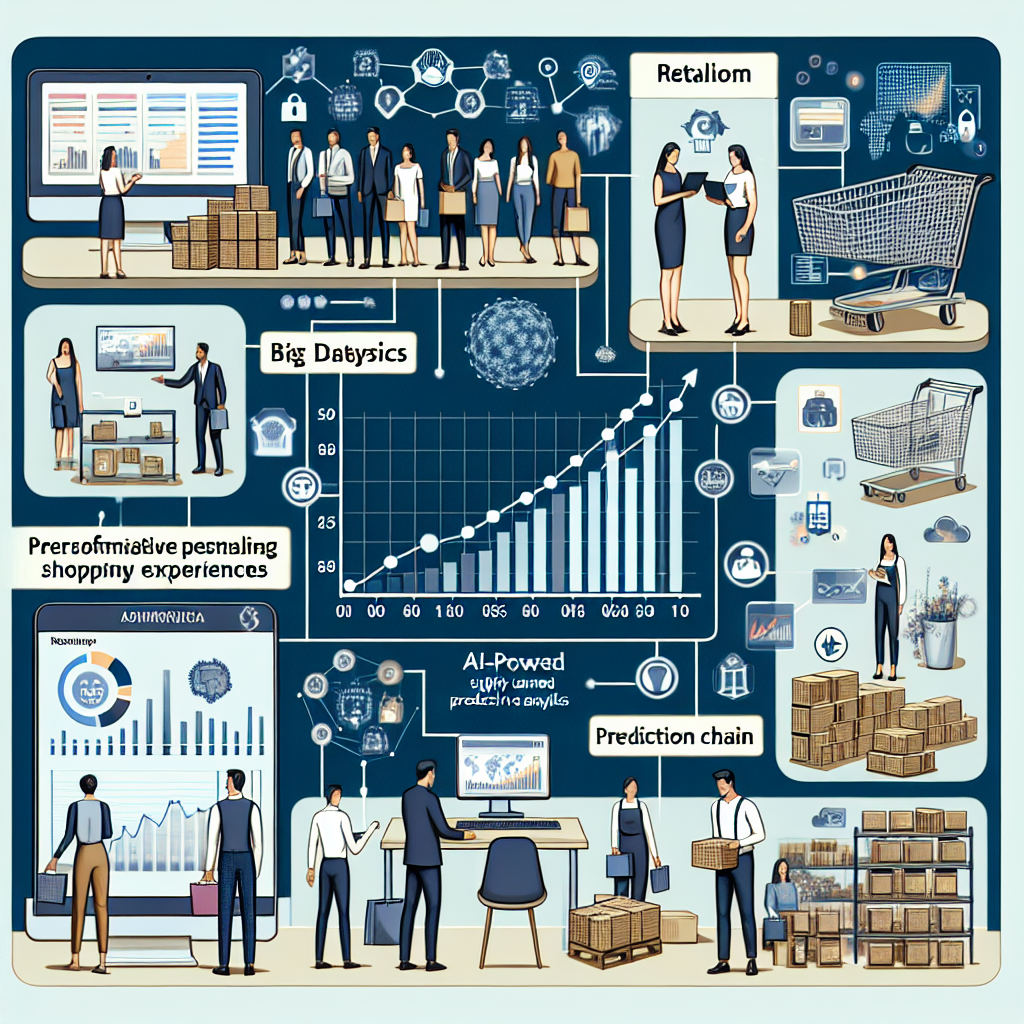 Explore how big data is transforming retail strategies, personalizing customer experiences, and optimizing supply chain operations.
Latest from BDA Tech Brief
- Harnessing Predictive Analytics for Competitive Advantage
- The Rise of Predictive Analytics in the Big Data Landscape
- Transformative Trends in Big Data: A Surge in Real-Time Analytics
- The Rise of Predictive Analytics: Transforming Business Decision Making
- The Rise of Predictive Analytics in Accounting
Most Read
-

-
Mar 11 2019
-
Written by Danielle Loughnane
 According to Kaggle, an online community for data scientists and…
-
-

-
Oct 26 2018
-
Written by Kim Del Fierro
In the age of digital technology, the biggest asset any…
-
-
-
Aug 26 2019
-
Written by Danielle Loughnane
Not everyone needs to be a data scientist, but every…
-
-
-
Jan 13 2019
-
Written by Danielle Loughnane
According to the Harvard Business Review, every company needs a…
-