






In recent years, the healthcare industry has been revolutionized by analytics, offering new avenues for precision medicine. Analytics in healthcare is about harnessing vast amounts of data from diverse sources, transforming patient care, and improving outcomes.
Precision medicine, an emerging approach for disease treatment and prevention, seeks to optimize efficiency and therapeutic benefit by considering the variability in genes, environment, and lifestyle for each person. Data analytics is at the core of this approach, helping clinicians make informed decisions.
Today, health analytics aims to make sense of data collected from electronic health records, wearable devices, and genetic information to develop a comprehensive understanding of patient profiles. Healthcare providers are thus enabled to tailor treatments to individual patients rather than relying on a one-size-fits-all model.
A notable trend in healthcare analytics is the use of machine learning algorithms to predict patient outcomes. These algorithms can detect patterns in massive datasets that can elude human analysis. For example, algorithms can flag early warning signs of diseases like diabetes or cancer long before they manifest through traditional clinical methods, enabling proactive intervention.
Moreover, analytics is instrumental in operational efficiencies within healthcare organizations. By analyzing patient flow and resource utilization, hospitals can optimize operations, reduce costs, and enhance patient satisfaction. The data-driven decisions enable healthcare providers to allocate resources more effectively, ensuring that patients receive timely care.
Incorporating real-life business cases highlights the potential implications of analytics. A study conducted by a leading healthcare provider showed that leveraging data analytics could reduce hospitalization rates by 20% through improved patient monitoring and predictive interventions.
Despite its promise, the adoption of analytics in healthcare is not without challenges. Data privacy, security, and interoperability are significant concerns. Ensuring that patient data is securely processed and shared across systems must be a priority for healthcare providers.
As regulatory frameworks continue to evolve, healthcare organizations must stay agile, adapting to new policies that govern patient data handling. The aim is to improve patient care through analytics while maintaining data integrity and security.
The role of analytics in healthcare will continue to grow, offering greater precision, transparency, and personalization in patient treatment. By embracing data-driven decision-making, healthcare providers can enhance patient outcomes, ushering in an era of more effective and efficient healthcare.
Estimated reading time: 1 minute, 57 seconds
Analytics in Healthcare: Harnessing Data for Precision Medicine Featured
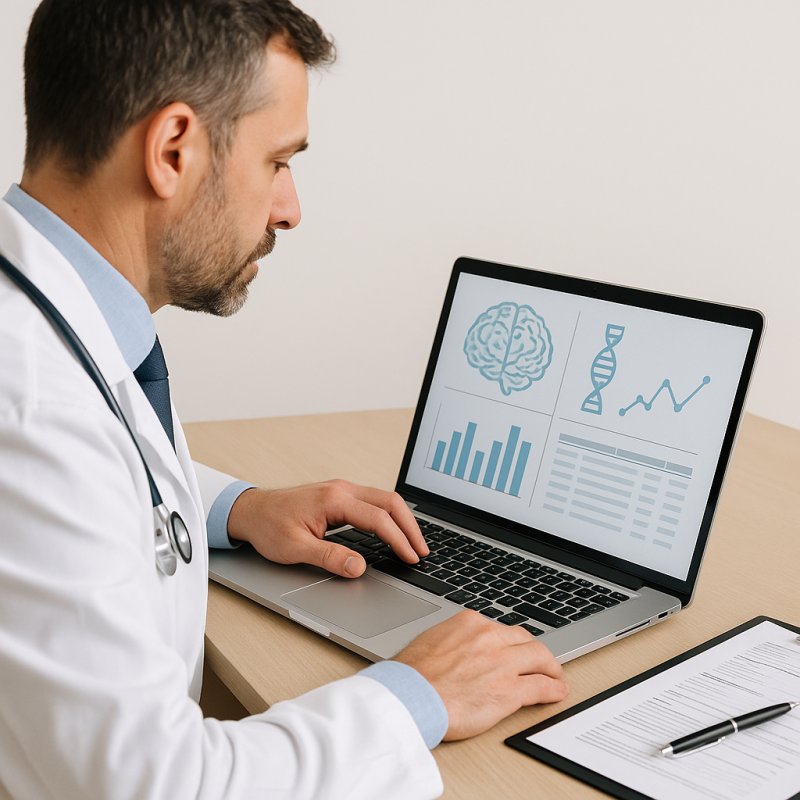 Explore how analytics in healthcare is transforming precision medicine, enabling data-driven treatment decisions, and improving patient outcomes through innovative data utilization strategies.
Latest from BDA Tech Brief
- The Rise of Predictive Analytics in Business Decision-Making
- The Surge in Big Data Adoption: Transformative Trends and Insights
- Unlocking Business Growth: The Strategic Edge of Big Data Tools in 2023
- The Surge of Big Data in Enhancing Financial Compliance
- Decoding the Future: The Rise of Predictive Analytics in Business
Most Read
-

-
Mar 11 2019
-
Written by Danielle Loughnane
 According to Kaggle, an online community for data scientists and…
-
-
-
Aug 26 2019
-
Written by Danielle Loughnane
Not everyone needs to be a data scientist, but every…
-
-

-
Oct 26 2018
-
Written by Kim Del Fierro
In the age of digital technology, the biggest asset any…
-
-
-
Jan 13 2019
-
Written by Danielle Loughnane
According to the Harvard Business Review, every company needs a…
-